

Metal Recovery Chemistry Quotations: Compare the Scope
How should you compare metal recovery chemistry quotations?
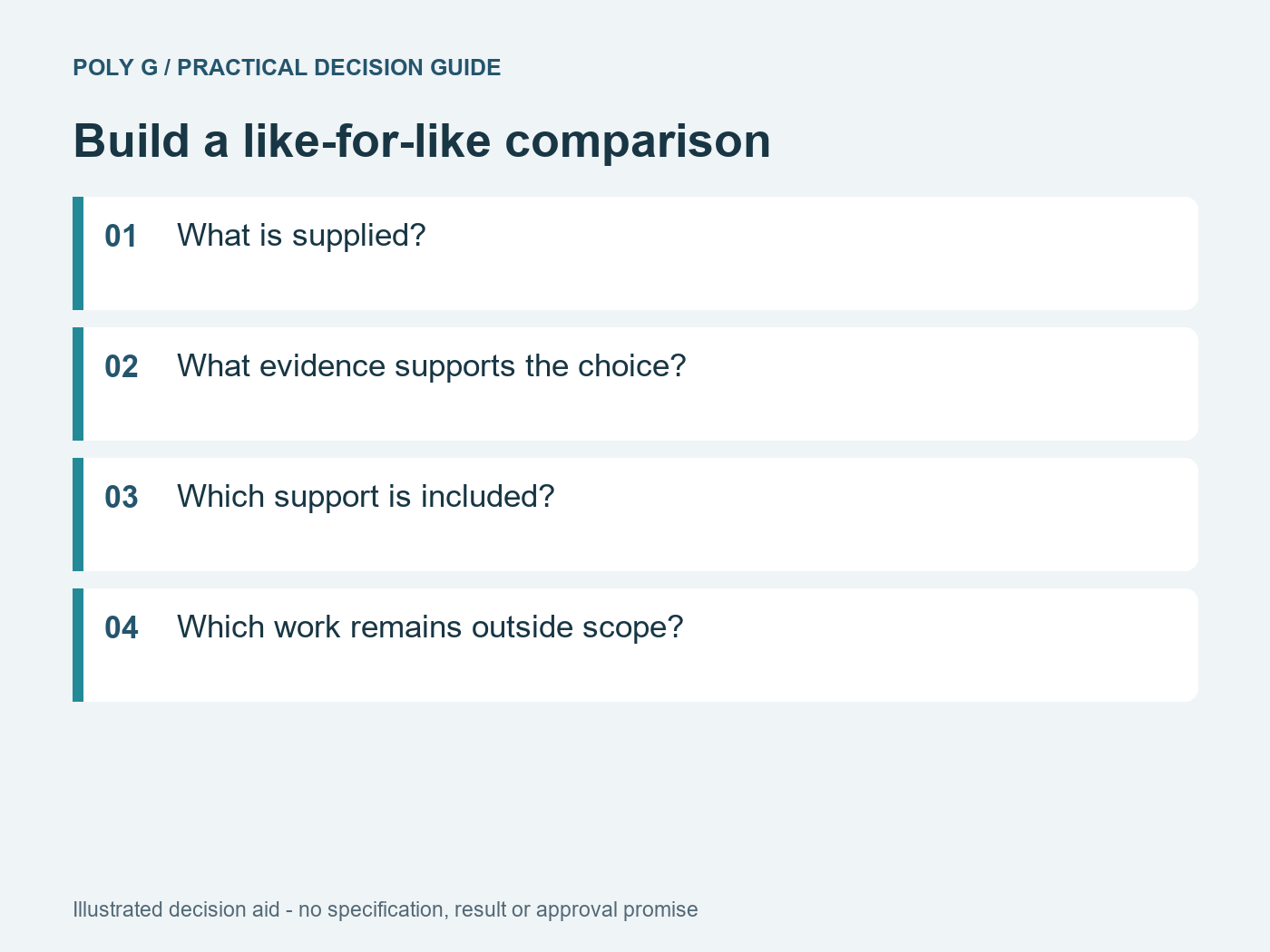
Compare the quoted scope before comparing the headline price. Establish the intended material and application, what chemistry or system is supplied, what evaluation supports the recommendation, and whether consultation, integration or continuing support is included. Metal recovery chemistry quotation scope can differ substantially between proposals. A lower figure is not a like-for-like comparison if it covers a different product, quantity or stage of work.
A quotation can describe a product, a trial, technical advice or a larger integration engagement. Those are different purchases. A buyer who combines them under “recovery solution” can miss a responsibility or assume that a projected outcome is part of the supplier’s commitment.
PolyGO is a chemistry and systems vendor for precious metal recovery. It is not presented as the operator receiving waste and carrying out the customer’s recycling activity. This guide helps purchasing teams compare the information in proposals without prescribing a chemical process or promising that a particular product suits their feedstock.
Describe the requirement consistently
Give each potential supplier the same verified description of the requirement, within the information the business can appropriately share. Identify the intended application, relevant material information, project stage and the questions the supplier is expected to answer.
Where information is missing, label it as missing rather than filling it with an assumption. An apparently complete enquiry can be less useful than a candid one if the technical recommendation rests on invented or outdated input.
Keep any later clarification connected to the proposal. If one supplier has reviewed additional information and another has not, the two recommendations may be based on different knowledge of the requirement. Resolve that difference before treating the prices as directly comparable.
Identify which stage of work is being priced
| Possible scope | Question to answer | Common comparison mistake |
|---|---|---|
| Material evaluation | What assessment and deliverables are included? | Treating a sample assessment as a complete production project. |
| Chemistry or system supply | Which item, quantity and specification are proposed? | Comparing a product price with a wider support package. |
| Technical consultation | Which questions, time or deliverables does it cover? | Assuming all future troubleshooting is included. |
| Integration coordination | Which interfaces, contractors and handover work are in scope? | Assuming technical project management is full EPC contracting. |
The table is a way to read proposals, not a statement that every supplier offers every element. The accepted engagement should identify which elements apply and where another party’s work begins.
Keep product claims separate from your application’s evidence
A product page may describe a target use or headline performance claim. Ask what evidence supports the proposed choice for the material and application being discussed. Do not treat a general product statement as a guaranteed result for the customer’s operation.
PolyGO’s PolyGOResin information describes its resin offering. If a proposal recommends that product, the buyer still needs the relevant specification and the technical explanation for the proposed application. This guide does not certify compatibility, recovery or purity.
Ask the responsible reviewer to distinguish measured or observed information, estimated outcomes and assumptions still needing confirmation. Keep that distinction when the proposal is summarised for management. A short procurement summary should not make an estimate appear to be an accepted production guarantee.
Ask what the evaluation deliverable means
PolyGO’s waste evaluation page describes characterisation and a bench-scale trial, together with a recommendation and estimated economics. Confirm which work is proposed for the actual enquiry and what information the resulting report will provide.
An assessment of a supplied sample should remain linked to that sample and its stated context. If the business plans to use a different material or changes the project objective, raise that before relying on the earlier recommendation.
Also confirm what happens after the report. A recommendation can identify a possible next stage without including the engineering, supply or implementation work required to reach it. The buyer should be able to distinguish the completed assessment from the work still to be commissioned.
Compare support and responsibility explicitly
Read the proposal for the technical questions it addresses and the deliverables it promises. PolyGO’s outsource chemist service is described as a stand-alone engagement as well as a route for selection guidance and troubleshooting. Do not assume that consultation is included indefinitely with every product purchase.
For a larger project, check the coordination scope separately. The project management service lists procurement, contractor scheduling, integration and handover activities, while distinguishing technical project management from full EPC contracting.
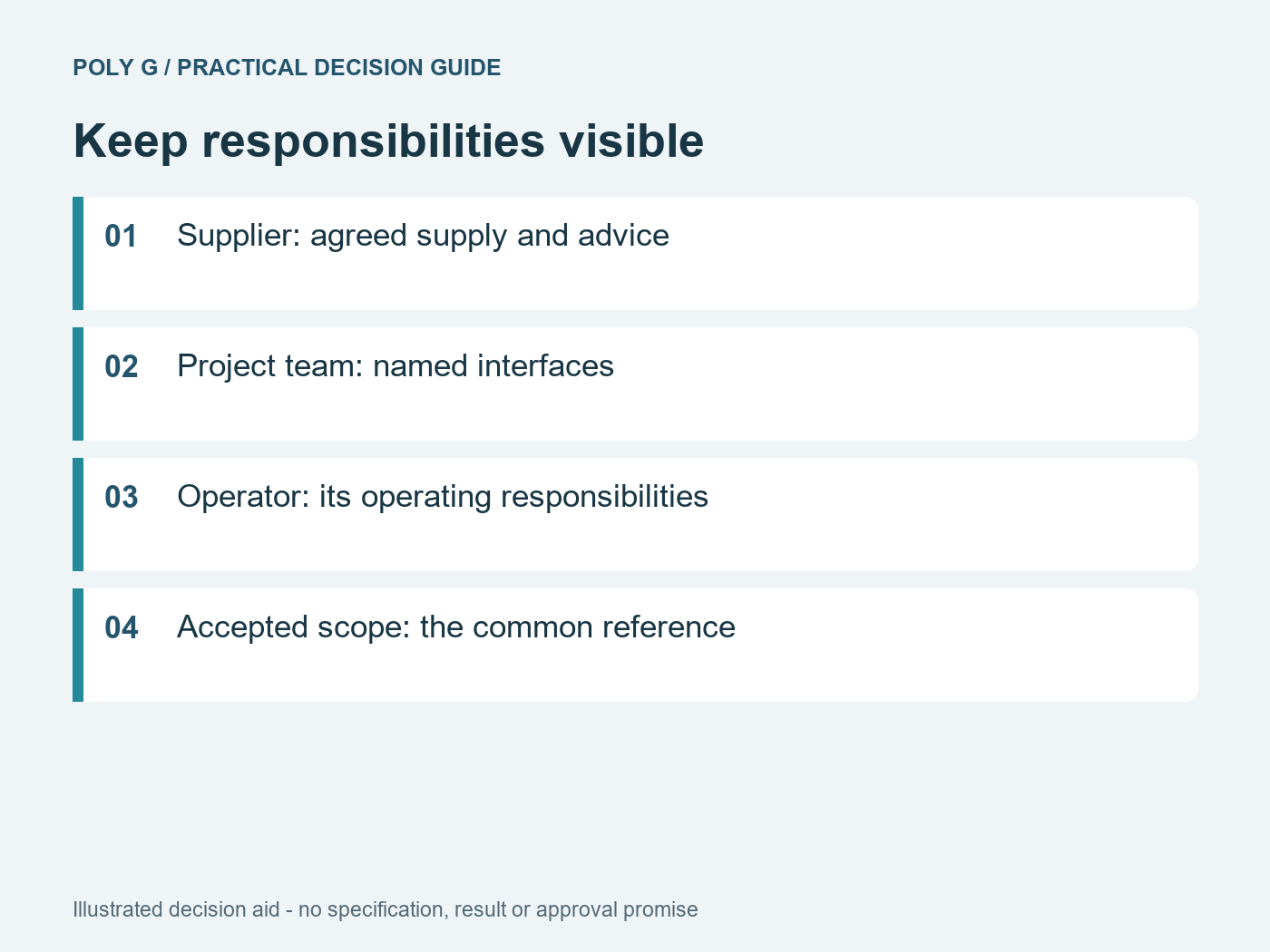
Record who is expected to operate the technology and who deals with the other site interfaces. If a proposal leaves an important responsibility unclear, seek clarification before accepting it. An omission should not be resolved by assuming that whichever supplier has quoted for chemistry also owns all other parts of the project.
Read the commercial detail against the accepted scope
Once the technical and service scope is clear, review the quoted quantities, price basis, payment terms, delivery arrangements and any stated validity or exclusions. Ask about ambiguities rather than importing assumptions from an earlier purchase.
If two proposals differ, summarise the difference before choosing. For example, one may price a product supply while another includes a separately described review. The decision is not simply that one is cheaper; the business must decide which scope meets the requirement and whether further work is needed.
Keep the final clarification, accepted proposal and relevant technical information together. That record helps the operating and project teams understand what was purchased, what remains open and which assumptions need reconsideration if the application changes.
Quotation questions
Is the lowest chemistry price necessarily the lowest project cost?
No conclusion follows from the headline figure alone. Compare the product, quantity and included work, then identify any additional evaluation, integration or support needed for the intended project.
Does a product-page performance claim apply to my material?
Do not assume so. Ask for the relevant technical explanation and evidence for the proposed application, with any limits or assumptions clearly identified.
Does buying chemistry include operating the recovery process?
Confirm the actual scope. PolyGO describes itself as supplying chemistry and systems while the customer’s operation runs the technology; do not assume it is a waste-recycling service.
What should happen when the scope changes?
Identify the change and obtain a clear revised proposal or clarification through the agreed process. Preserve the accepted version so later teams know which scope and assumptions apply.