
A useful waste evaluation enquiry begins with a clear description of your material, the information you already have and the decision you need to make. You do not need to arrive with a chosen chemistry. You do need to distinguish documented facts from estimates and unanswered questions.
PolyGO describes itself as a chemistry and systems vendor, rather than a recycler. That distinction matters when preparing your enquiry: explain the operation you are considering, rather than assuming you are asking for a scrap purchase offer. Its waste evaluation service is the appropriate starting point for discussing assessment of your material. This guide helps you organise that first conversation without presuming a technical outcome.
Start with the decision you need help making
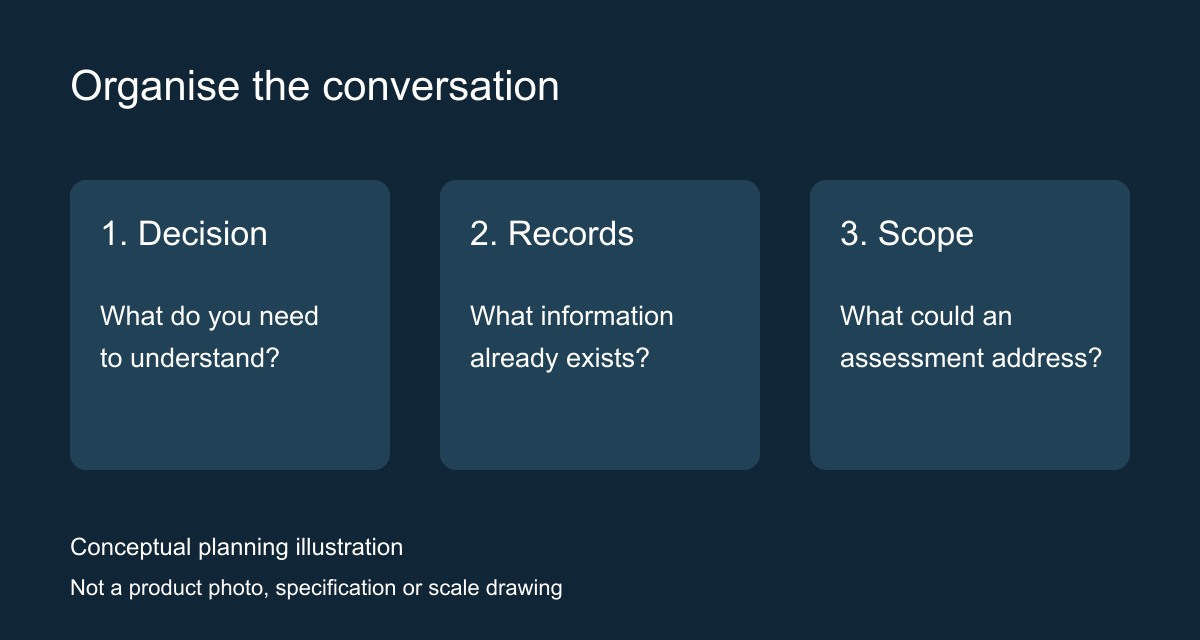
Before assembling attachments, write one sentence describing your decision. For example: “We need to understand what information is missing before discussing recovery options for this stream.” This gives the conversation a purpose without assuming that the material is suitable, that a particular metal is present or that a project will be commercially worthwhile.
Separate that decision from your preferred answer. Wanting to recover a target metal is different from having evidence of its content. Having a composition report is different from knowing what an operation could recover. Ask PolyGO to explain which questions an assessment could address and which would remain unresolved.
Describe the material without overstating what you know
PolyGO’s contact page asks for feedstock type and approximate composition. Use the most specific description supported by your records. Include the material’s origin within your operation, how you identify the stream and whether the enquiry concerns one batch or an ongoing supply. If a description comes from a supplier rather than your own records, say so.
For electronic materials, PolyGO’s e-waste application page names printed circuit boards, connectors, pins and component scrap. Those categories can help you describe an enquiry, but a category name does not establish the composition or suitability of your particular material. Avoid turning “connector scrap” into a claim about precious-metal content without supporting information.
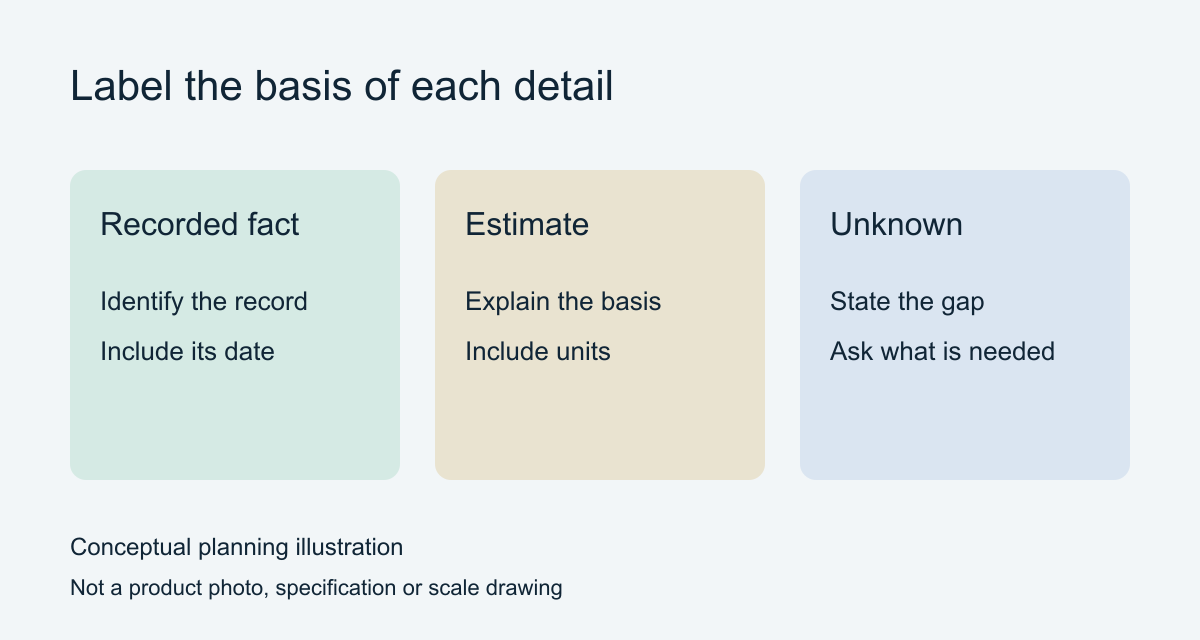
If you have existing reports, identify their date, the material they describe and any limitations stated in them. If you have no composition evidence, write “composition not yet established”. A visible information gap is more useful than an apparently precise figure whose basis nobody can explain.
Build a checklist that supports a technical conversation
The following checklist follows the information categories on PolyGO’s contact page. It is an enquiry organiser, not an assessment protocol. Complete what you can from existing records, leave unsupported fields open and use the final column to prepare questions.
| Information | What to prepare | Question to resolve |
|---|---|---|
| Feedstock identity | A specific description, origin and batch or stream reference. | Is this enough to define the material being discussed? |
| Approximate composition | Existing reports or descriptions, with dates and their stated basis. | What additional information would be needed? |
| Target metals | The metals you want to discuss, separating documented content from expectations. | Which targets can be assessed for this material? |
| Required output form | Your intended output, or a clear statement that this is undecided. | What needs clarification before discussing options? |
| Throughput | Estimated quantity per day or month, units and the basis of the estimate. | How should irregular or changing volumes be described? |
| Current operation | Existing chemistry and operational constraints, where known. | Which details are necessary for the initial discussion? |
| Applicable requirements | Documented effluent, safety or other requirements relevant to your operation. | What must be reviewed before any recommendation? |
| Decision required | The business question you want the assessment to inform. | What would remain uncertain after the proposed work? |
Make quantities and objectives interpretable
PolyGO asks for estimated throughput per day or month. Include units and explain whether your number describes current activity, a forecast or a possible future stream. A monthly estimate without that context can leave the reader unsure what operation you are describing. If records vary, provide the available range and explain its basis rather than inventing a stable average.
State your target metal or metals separately from your required output form. If the output requirement has not been decided, say so. Likewise, distinguish an essential operational constraint from a preference. This helps you ask focused questions without presenting an early assumption as a settled project requirement.
Use hypothetical examples to spot missing information
Hypothetical example: an occasional batch. A company has connector scrap from an identified activity but no documented composition. Its useful enquiry describes the batch, records the quantity and states that precious-metal content is unknown. It asks what information PolyGO needs before discussing assessment. It does not infer gold content from appearance or request a guaranteed recovery figure.
Hypothetical example: a recurring stream. An operator has monthly quantity records and an older composition report. Its enquiry explains which material the report covered and whether the present stream is known to match it. The operator asks whether the existing information is relevant to the proposed assessment. It does not assume that an earlier report describes every subsequent batch.
Both examples make uncertainty explicit. Neither establishes feedstock suitability, a recommended chemistry or an expected result. Their value is in showing how a buyer can ask a more answerable question using information already available.
Clarify scope before comparing an estimate or recommendation
Ask what material, records and assumptions any proposed assessment would cover. Request a distinction between information about composition, an indicative valuation and a recommendation for an operation. If an estimate is provided, ask which inputs support it, which costs it includes and which unresolved questions could change the conclusion.
Discuss current chemistry and operational constraints without using the enquiry as a reason to change your process. PolyGO’s contact checklist also asks about compliance regimes, including effluent and safety. Identify requirements you already know apply and ask what further information is needed; do not assume a proposed option meets them simply because it has been discussed.
Before arranging any material transfer, ask PolyGO to confirm what it needs and the applicable arrangements. This checklist does not specify sampling, packaging or shipping procedures. Also ask about the scope and timing of the proposed work directly, so that planning reflects your actual enquiry.
Send a concise enquiry with traceable attachments
Use a short opening message: identify your company, describe the material, state the decision and list the records available. Then add the checklist details that you know. Label attachments clearly enough that the recipient can connect each document to the relevant batch or stream.
Finish with a few prioritised questions rather than a request for certainty across every aspect of a project. For example, ask whether the material description is sufficient, what missing information matters first and what scope PolyGO proposes. Use the PolyGO contact page to begin the conversation. Keep unsupported composition, compatibility and recovery expectations identified as questions throughout.
Questions buyers commonly need to resolve
Can I enquire without knowing the exact composition?
Describe what you know, identify the missing composition information and ask what is needed next. Do not fill the gap with assumed metal content.
Does an application category confirm my material is suitable?
No. Use the category to describe your material, then ask PolyGO to assess the specific enquiry. A category alone does not establish compatibility or an outcome.
Should I choose a chemistry before contacting PolyGO?
Prepare the material description, objectives and constraints first. Ask what information is needed before discussing a recommendation rather than treating a product choice as already settled.